Jews and Christians in the Quran
What does the Quran say about Jews and Christians? This short video sets its warm verses beside its hard ones: how it describes them, their status, the jizya, the Sacred Mosque, and the fighting verses. It also explains why classical scholars said the later, harder verses cancelled the earlier, warmer ones.
Recitation: Sheikh Mahmoud Khalil al-Hussary, via mp3quran.net.
Transcript
From the English subtitles. Arabic is shown where the recitation is captioned.
حَتَّىٰ يُعْطُوا۟ ٱلْجِزْيَةَ عَن يَدٍ وَهُمْ صَٰغِرُونَ
“…until they pay the jizya, by hand, humbled.” (Quran 9:29)
The verse you just heard is about Jews and Christians.
The Quran has warm words for them, and hard ones.
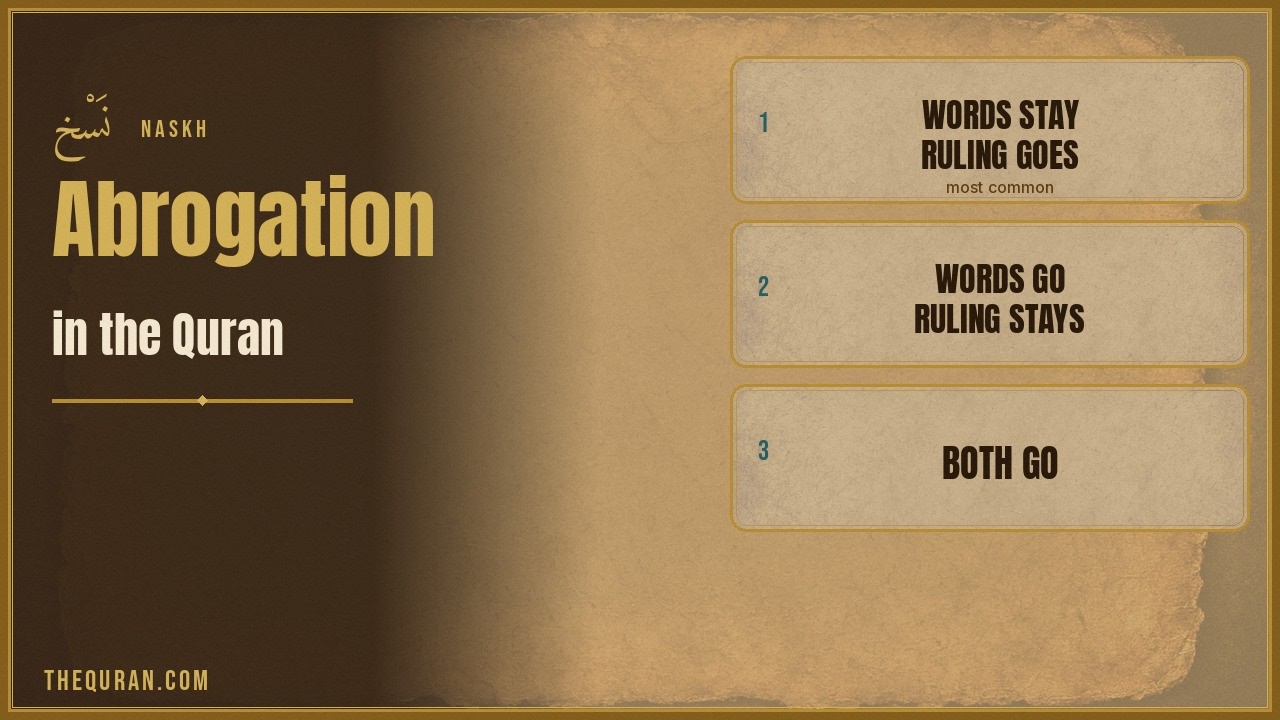
And classical scholars said many warm ones were cancelled.
Here is what it says.
The Quran calls them People of the Book: thirty-one verses, all but one from Medina, where Islam's Prophet lived beside Jewish tribes.
Side by side.
Verse 2:62: Jews and Christians who believe and do good “have their reward”.
Then 3:85: any religion but Islam “will never be accepted”.
Ibn Abbas said the second came later, and replaced the first.
“Pardon and overlook,” says 2:109, about the People of the Book.
And 5:13: “pardon them.”
Four classical works say the jizya verse, 9:29, cancelled 2:109.
From Mecca: “Argue with the People of the Book only in the best way. Our God and your God are one.”
Classical works say: replaced by the command to fight.
“If they turn away, your duty is only to convey.”
“No compulsion in religion.”
For Ibn Salama, the Sword Verse cancelled both: “kill the polytheists wherever you find them.”
So how many good verses were annulled?
Ibn Salama counted a hundred and nineteen — half his list — cancelled by the Sword or jizya verses.
Ibn al-Arabi: a hundred twenty-four.
Some warm verses have no abrogation claim: Christians “nearest in affection”, in the verse that calls Jews “most hostile”; and “they are not all alike”.
The hard side: they “distort words”. “Not as allies.” Some became “apes and pigs”.
On belief: “They have disbelieved who say God is the Messiah,” or “the third of three.”
And 9:30: Jews say Uzayr is God's son, Christians the Messiah. “May God fight them.”
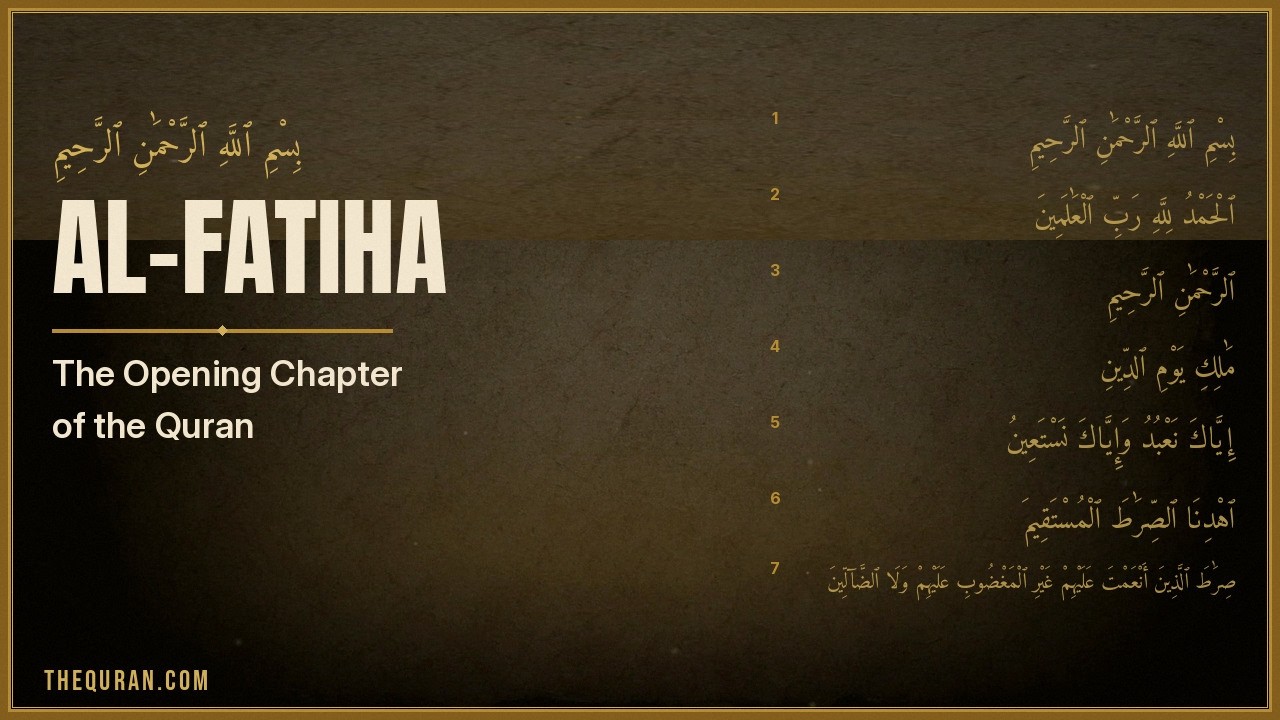
At least seventeen times a day, Muslims pray: not “those who earned anger, nor those astray.”
In Tirmidhi, Islam's Prophet says: the Jews are under anger, the Christians astray. Ibn Kathir agrees.
The Quran ranks Muslims above other people, including Jews and Christians.
“You are the best nation brought forth for mankind.”
Believers who do good are “the best of creatures.”
Those who disbelieve among the People of the Book and the polytheists are “the worst of creatures.”
The jizya verse requires them “humbled”: “abased, belittled.”
The Quran says the polytheists are “unclean,” so let them not approach the Sacred Mosque.
Classical jurists, and Saudi law today, applied that ban to Jews and Christians too.
They may not enter Mecca.
Bukhari records: Banu al-Nadir exiled; Banu Qurayza — “some you killed, and some you took captive”; every Jewish tribe expelled.
And Umar heard Islam's Prophet say: “I will expel the Jews and Christians from Arabia.”
The Quran is not in the order it was revealed.
Its chapters are arranged roughly from longest to shortest.
Chapter nine was not the ninth revealed.
It was one of the very last, number 113 of 114, and it carries the jizya and sword verses.
So the warm words came first, and the hard words came last.
By the scholars' own rule, the last word wins: the warm verses were cancelled, and the hard ones still stand.
That is what the Quran says about Jews and Christians.
Sources at thequran.com.
Sources
- Recitation of Quran 9:29: Sheikh Mahmoud Khalil al-Hussary, via mp3quran.net.
- Arabic text: Tanzil Uthmani (CC BY 3.0). Working English translations: TheQuran.com, compared with Pickthall (1930) and Yusuf Ali (1934).
- Quran verses cited: 1:7; 2:62, 2:65, 2:75, 2:109, 2:256; 3:20, 3:85, 3:110, 3:113, 3:139, 3:199; 4:46, 4:171; 5:5, 5:13, 5:51, 5:60, 5:72–73, 5:82; 7:166; 9:5, 9:28, 9:29, 9:30; 29:46; 33:26; 59:2; 63:8; 98:6, 98:7.
- Hadith: al-Bukhārī 4028; Muslim 1767a and 2167a; al-Tirmidhī 2954 (sunnah.com numbering).
- Tafsīr: Ibn Kathīr, Tafsīr al-Qurʾān al-ʿaẓīm, on 1:7, 2:62, 3:110, 3:113, 3:139, 3:199, 5:51, 5:82, 9:28, 9:29, 33:26, 59:2, 63:8, 98:6, 98:7; al-Ṭabarī, Jāmiʿ al-bayān, on 1:7, 2:62 (no. 1114), 9:29.
- Abrogation works: Qatāda, al-Nāsikh wa-l-mansūkh; al-Naḥḥās, al-Nāsikh wa-l-mansūkh; Ibn Salāma, al-Nāsikh wa-l-mansūkh; Makkī, al-Īḍāḥ; Ibn al-ʿArabī, al-Nāsikh wa-l-mansūkh; Ibn al-Jawzī, Nawāsikh al-Qurʾān; al-Suyūṭī, al-Itqān.
- Abrogation counts: TheQuran.com naskh data (9 works). Full data: study.thequran.com/naskh.
- Revelation order: the Cairo 1924 order printed in the mushaf (chapter 9 is 113 of 114).
- Entry to Mecca today: Saudi Ministry of Hajj and Umrah, haj.gov.sa.
Related pages on Study
Read the verses and the abrogation data on Study.
Next videos
Subscribe on YouTube
New videos are published on the TheQuranDotCom channel, then play here.
Get a note when a video is out
Leave your email and we will write when a new video is published.